Medspa providers devote significant time after every appointment completing documentation, pulling them away from patient care and other work that drives revenue. That operational burden only grows as appointment volume increases, but artificial intelligence can help.
This guide explores how AI medical scribe technology captures session notes in real time, the features to look for when choosing clinical scribing tools, and how Boulevard is actively developing its AI Scribe feature to meet the privacy and accuracy standards medspa workflows require.
What’s an AI Medical Scribe for Medspas?
An AI medical scribe uses ambient listening and natural language processing models to record clinicians’ conversations with patients and transcribe them into structured, reviewable notes and summaries. AI documentation is part of a broader wave of medspa trends aimed at reducing administrative work to bolster high-quality client experiences. With an AI scribe, medical providers can focus on patients rather than get caught up with manual note-taking.
Medical documentation AI automates work that repeats after nearly every patient consultation, including detailed documents about treatment parameters, client responses, and post-care instructions. Providers that use AI for medical documentation technology simply review and edit drafts, freeing up time that compounds across a full appointment calendar.
AI Medical Charting That Captures Sessions in Real Time
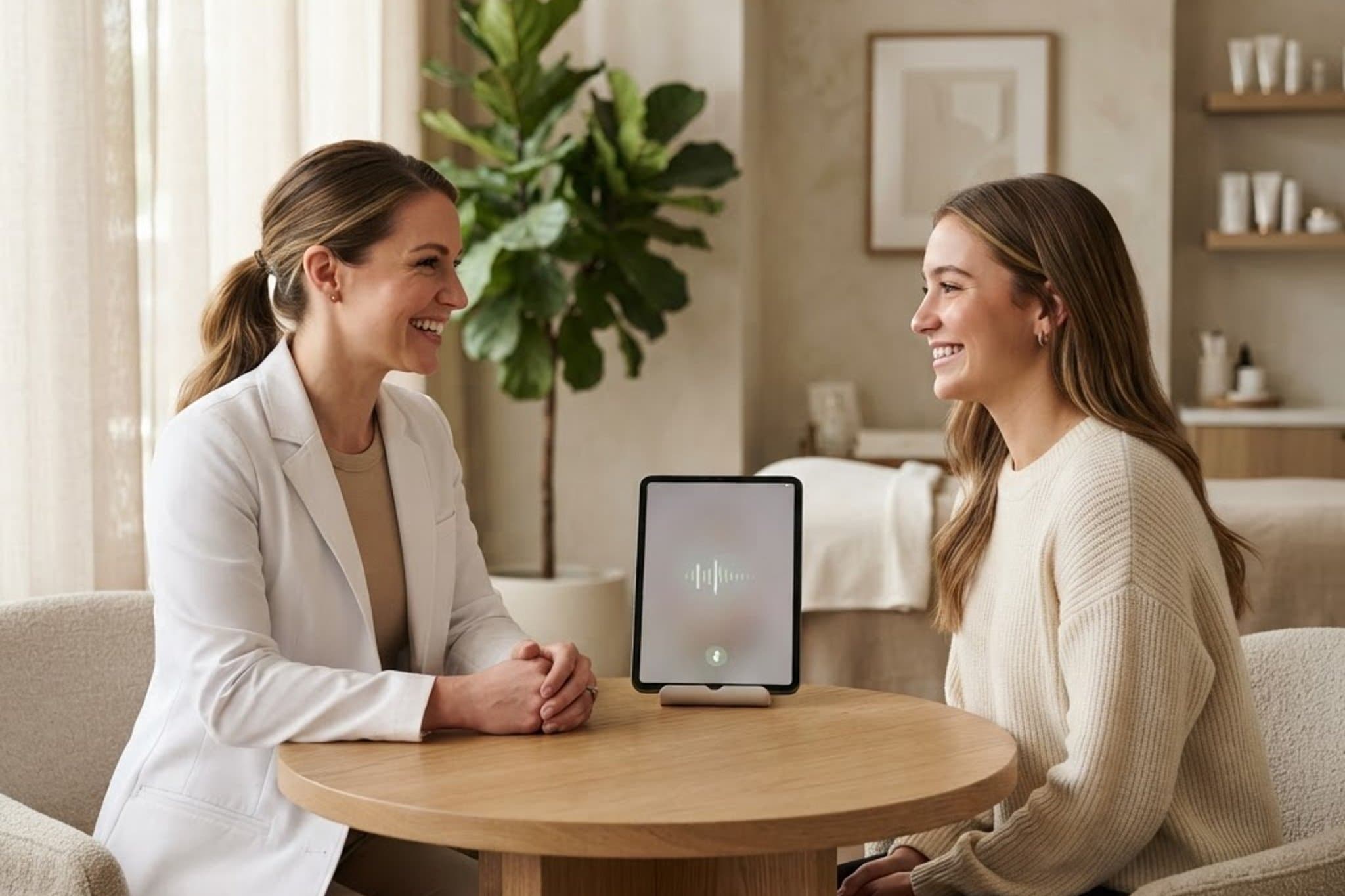
During a patient’s appointment, an AI medical scribe runs in the background via a smartphone, tablet, or other integrated platform. Ambient AI listens to the conversation, filters out background noise, and identifies information relevant to clinical notes. As the appointment progresses, the provider never has to stop and interact with the medical spa documentation software.
Medical treatments are deeply personal, and medspa patients expect a high level of attention and care from their doctors and providers. Having to turn their focus to typing or taking notes makes it hard for providers to stay fully present. Ambient AI medical documentation keeps attention where it belongs: the patient, the conversation, and a high quality of care.
From Session to Structured Note: How AI Handles Notes
Once an appointment wraps up, AI scribing tools turn the captured conversation into a structured clinical documentation record for physicians to review and finalize. Instead of writing notes from scratch, the provider reviews the draft’s accuracy and makes any necessary adjustments.
For medspa providers, using AI for medical notes organizes treatment information and follow-up instructions alongside details already captured during client intake. That turns documentation into a review task rather than a creation workflow, considerably reducing the workload that follows each appointment.
Software built for the medspa experience
Clients expect a personalized, luxurious experience — generic charting tools aren’t built to support that. Boulevard’s HIPAA-aware med spa software centralizes charting, intake forms, and e-prescriptions with scheduling and payments in one platform.
How Medical Scribe AI Reduces Provider Burnout
A few minutes of post-appointment documentation quickly accumulates across a packed calendar. When back-to-back appointments leave little room for follow-up, clinical notes pile up and get pushed to lunch breaks or follow clinicians home at the end of a long day. For many aesthetic and medical spa providers, after-hours documentation adds to the administrative burden widely associated with physician burnout.
Medical scribe AI compresses the documentation responsibilities of each appointment, granting more capacity for patient-facing work that generates medical spa revenue.
The payoff goes far beyond clinical efficiency and profits. Reducing documentation gives providers more capacity for patient care while making the demands of day-to-day spa management easier to absorb.
4 Key Capabilities of an AI Medical Scribe Built for Medspas
AI transcription and scribing tools aren’t always designed with medical spa workflows in mind. The following four features are essential to ensure an AI scribe can efficiently serve medspas’ needs while supporting patient privacy and high-quality care.
1. Ambient Listening That Stays in the Background
The most useful AI scribes disappear into the background. Medical providers shouldn’t have to type, dictate commands, or constantly interact with a screen while communicating with a patient. Ambient listening features capture the conversation so the consultation can naturally unfold and clients have clinicians’ undivided attention. That unobtrusive workflow preserves the personal connection medspa patients expect during treatment, supporting client satisfaction and retention.
2. AI Medical Documentation Designed for Medspa Workflows
Medical documentation utilizes unique vocabulary and clinical details. Providers may need to record device settings, injection volumes, and specific treatment areas. AI medical documentation built for aesthetic medicine should recognize medical terminology accurately and draft records structured around medspa-specific appointment types rather than general clinical formats. Generic note-taking tools that misidentify or misspell product names and aesthetic terminology create more review work, undermining confidence in the overall medical records.
3. Privacy and Security Standards That Meet Medspa Requirements
When providers bring AI scribes directly into patient encounters, the technology must support privacy and security standards that medspas depend on. Medspa operators need secure data handling, clear audit trails, and role-based access controls that limit records and transcripts to designated team members. This becomes especially important for multi-location medspas where different teams may require various levels of access to patient records.
The underlying system design needs to wrap privacy and security into every stage of the documentation workflow. That gives operators greater control over patient information while reducing the risk of privacy breaches, regulatory penalties, and costly remediation.
4. Provider Review Built Into the Workflow
AI medical scribes should reduce documentation work without removing physicians from the final records. Every note needs a clear review and approval process so that clinicians can confirm details and make edits before moving on.
The best AI scribing software makes the review and verification process quick enough to squeeze in between appointments. Keeping providers involved also protects clinical accountability and supports more accurate long-term recordkeeping.
How Boulevard's AI Scribe Works for Medspa Providers
Boulevard is actively developing AI Scribe around the daily realities of medspa practices, where documentation must be accurate and reliable across busy schedules and sensitive patient conversations. A commitment to privacy and security shapes Boulevard’s products from the beginning.
Boulevard’s AI Scribe aims to cut administrative work tied to clinical documentation while improving the quality of client records. Because it sits within Boulevard’s broader medical spa management software, documentation stays connected to the systems medspa teams already use every day. The practical benefits include spending less time managing paperwork, reducing the risk of physician burnout, and leaving more time for high-quality patient care.
Learn more about how Boulevard’s Medspa Software helps teams reduce administrative burdens and more time engaging with patients.
FAQ
What Does an AI Medical Scribe Typically Cost for a Medspa?
AI medical scribe software pricing varies by provider and overall usage, with many platforms charging a monthly fee per user or session-based fees. Medspa owners should compare the cost against the administrative hours recovered each week. Consistent time savings, especially spent on repetitive administrative work, can make the investment cost-neutral or positive within the first month of use.
Does AI Scribe Technology Work for All Medspa Service Types or Only Consultations?
AI medical scribes work the best for appointments with meaningful clinician-patient dialogue, such as consultations and follow-up assessments. However, providers can also narrate procedural details during quieter treatments to capture the session. In either situation, AI-assisted templating can help speed up post-session documentation.
How Does AI Documentation Affect the Client Experience During a Medspa Appointment?
The best medical spa AI scribes work quietly in the background. They don’t make distracting noises and require little or no interaction by the physician. Clients should notice a difference in their provider’s attention: more eye contact, better listening, and a more present, personal consultation.
How Does Boulevard’s AI Scribe Connect to Existing Client Records and Intake Forms?
Boulevard is designing AI Scribe to capture the session, use that content to complete relevant documentation, and then send the record to the provider for review and confirmation. The workflow connects clinical notes and documentation directly to the client profile, keeping them with existing client records and intake information.
How Long Does It Take Medspa Staff to Get Comfortable Using an AI Scribe Tool?
Adoption times vary by user, but using an AI scribe built into existing medspa management software helps relieve the learning curve and shorten onboarding periods. Training can focus on scribe capabilities rather than learning an entirely new system, making the AI medical scribe features easy to incorporate into day-to-day appointments.

Skya Jones
Sr. Medspa Education Manger
Skya Jones is an industry expert and consultant who serves as one of the in-house medspa experts at Boulevard. In this role, she collaborates closely with Boulevard’s team and their customers to help deliver exceptional, memorable client experiences. With nearly a decade of experience in the medical spa industry, Skya is deeply passionate about leadership and education, and is dedicated to empowering businesses to thrive. Prior to joining Boulevard, she successfully managed and provided consulting services to a range of medical spas and retail beauty businesses.
Related Posts

What Medspa EMR Software Is and What Medspas Actually Need
Explore the limits of traditional EMR software for medspas and learn how to choose a solution that actually supports your operations and client care needs.
Read Article
Patient Appointment Reminders: Cut No-Shows For Good
Cut no-shows and protect revenue with smarter patient appointment reminders. See how Boulevard helps medspas automate and personalize every touchpoint.
Read Article
How To Open a Medical Spa: A Step-by-Step Guide to Get Started
Learn how to open a medical spa, from startup costs to licensing requirements, with Boulevard’s nine-step process and supportive software.
Read Article
Best EMR for Medical Spas: How to Choose the Right Platform
Boulevard breaks down the best EMR for medical spas in 2026, and explains why many owners need an operational platform, not just clinical charting.
Read Article
HIPAA-Compliant Medical Spa Software: A Buyer’s Guide
Discover what HIPAA-compliant medical spa software has to include to protect sensitive patient data and keep your medspa operating safely.
Read Article
Virtual Receptionist Software: What Medspa Owners Need to Know
Boulevard explores virtual receptionist software, comparing standalone AI tools with integrated platforms that reduce missed bookings and admin work.
Read Article
AI Email Marketing: How Salons and Medspas Improve Results
Boulevard explores how AI email marketing helps salons and medspas personalize messages, automate campaigns, and turn more clients into repeat bookers.
Read Article
Patient Record Management: What Medical Spas Need to Know
Boulevard explains how patient record management for medspas works in one connected system, from HIPAA compliance and access controls to secure storage.
Read Article
How to Improve Salon Operations With an AI Assistant
Learn what an AI assistant for business can do for your salon operations, from supporting faster task navigation to saving time on admin work.
Read ArticleSign up for weekly blog updates.