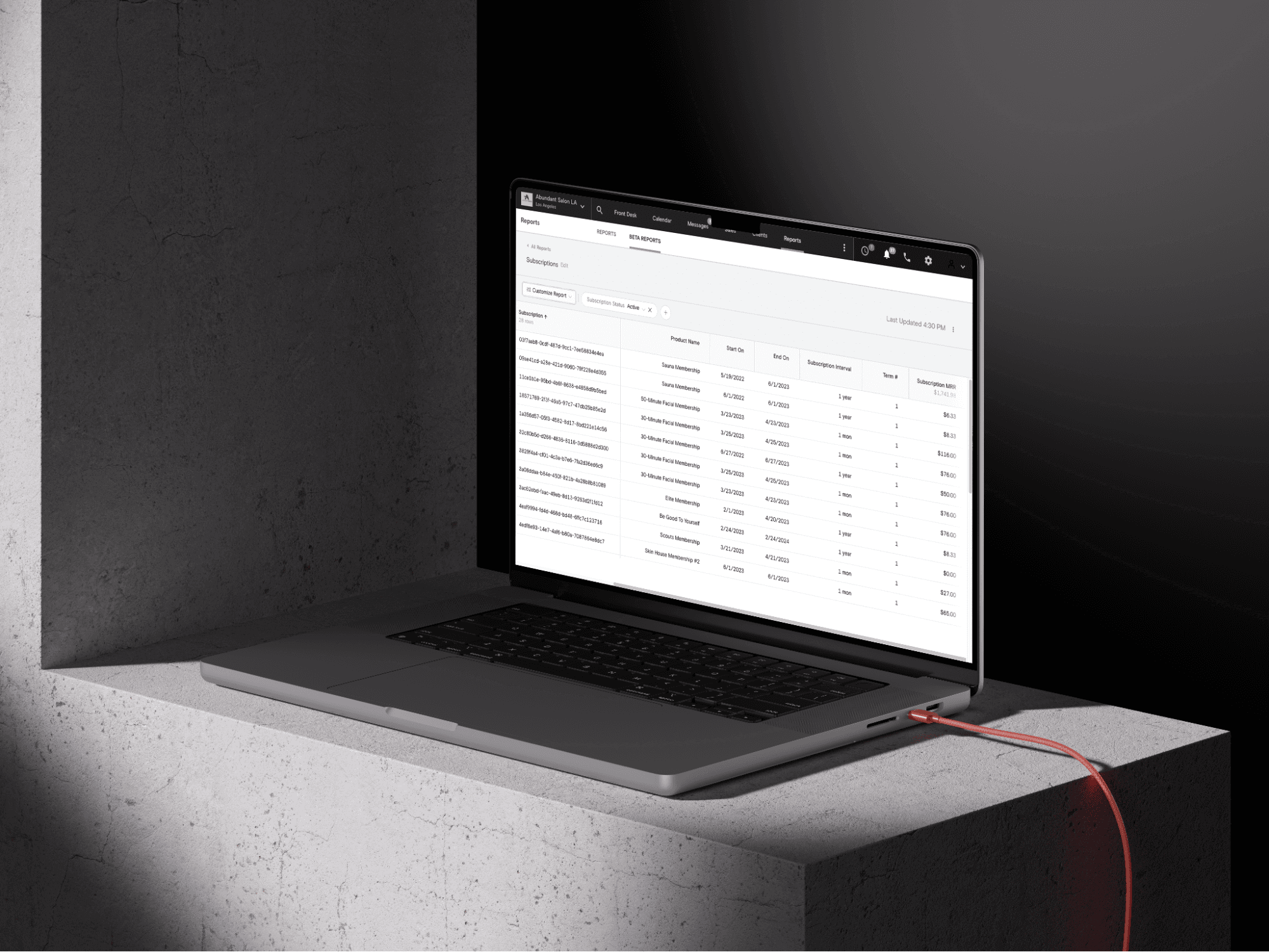
Most salon owners have access to more data than they realize. But stitching together reports by hand takes time, and without broader context, that process can leave valuable insights behind or give too much weight to insignificant factors.
In this guide, we’ll explain what salon analytics software tracks and which metrics have the greatest impact on revenue and retention. Plus, we’ll see how Boulevard’s native reporting tools help you turn performance data into a clear course of action.
What’s Salon Analytics Software?
Salon analytics management software collects data from places like your salon’s booking system and client records. Then it organizes the results into reports that show opportunities and threats. By breaking down performance into distinct metrics, this kind of platform helps salon owners connect daily operations to business results.
Software built for the salon experience
Busy salons need more than an appointment book — they need a system that keeps stylists booked, clients coming back, and retail moving. Boulevard’s salon software combines online booking, POS, and marketing tools built for the pace of salon life.
How Salon Management Software Drives Better Decisions
Every appointment leaves a trail of useful information. Calendars reveal online booking patterns and show how effectively providers perform. Checkout tallies final spends, while client profiles show purchasing patterns.
The best salon management software connects those records with your daily workflows. Reports update automatically, without requiring staff to re-enter information or sift through different data tracking tools. For multi-location businesses, owners can review each salon through the same reporting system and compare performance across the group.
What a Salon Dashboard Should Show You
A salon dashboard should answer the questions owners ask most often, without requiring you to constantly build custom reports. You should be able to tell at a glance whether staff scheduling is aligned with client demand, or if clients tend to return after their first appointments.
Indicators like rebooking rates and new-versus-returning client ratios offer quick, clear answers. Just keep in mind that too many metrics can make specific information harder to find. So the most useful salon reporting dashboards will prioritize a small set of KPIs that are tied closely to profitability and client management.
4 Key Metrics Every Salon Owner Should Track
Now, let’s look closer at some key metrics and what each one reveals about profitability and daily operations.
1. Provider Utilization Rate
Provider utilization rate measures how much of a stylist’s available time is booked. Raising utilization by even a small amount can add meaningful revenue without the effort required to attract new clients.
A low provider utilization rate can point to two potential problems: Your salon may schedule provider hours that don’t match client demand, or appointment placement might create short openings that are hard to fill.
Breaking utilization down by day and time shows how unused capacity affects the calendar. For example, long open blocks during the same shifts can signal a mismatch between staff scheduling and client demand. Cross-referencing those periods with online booking patterns reveals when clients prefer to book and where the salon may need to adjust provider availability.
And if you find a lot of short gaps between services, you can use Boulevard’s Precision Scheduling to address them. Boulevard automates open appointments based on stylist availability, transition time, and service demand, reducing awkward slots that conventional appointment scheduling apps leave behind.
2. Rebooking Rate
Rebooking rate measures the percentage of clients who schedule their next appointments before leaving the salon. A strong rate shows that clients maintain regular service schedules, giving your salon a more predictable revenue stream.
Comparing rebooking rates by provider shows where performance differs across the team. A low rate can be addressed with targeted training and reviews of how each team member handles rebooking conversations.
3. Retail Attach Rate
Retail attach rate measures the percentage of service appointments that include a product sale. A strong rate reflects an increase in revenue per client that doesn’t require more appointments.
Breaking this metric down by stylist shows which providers consistently turn service conversations into product recommendations. Owners can use those differences to examine what strong performers do well, and to determine where more product education or sales training could be useful to other stylists.
The same retail data can also improve inventory management when viewed by product category. For instance, you might notice that a scalp serum sells out quickly, then decide to keep more units on hand or introduce complementary products.
4. Average Ticket Size
Average ticket size is the amount clients typically pay per visit, and is most useful when tracked consistently. Changes in this KPI show how revenue per client grows or erodes over time.
Segmenting these trends by provider, service category, and client type helps you identify where the shift comes from. With enough detail, you can determine whether a decrease in average ticket size reflects changes in retail and add-on sales or is a response to recent price increases.
What Salon Software Reports Tell You, and How to Use Them Effectively
Salon reports surface the numbers and trends behind profitability and retention. Here’s how to track performance over time, then turn those findings into stronger business decisions.
Track Staff Performance
Staff performance data shows how each stylist contributes to the business, beyond just the number of appointments on their calendar. This is among the most useful data sets for staff management, including coaching and payroll decisions, because the same numbers can reveal several different trends.
Booking volume and rebooking rates show the demand each stylist generates, while average ticket size and retail attach rate reveal how much value comes from those appointments. These numbers can also point to how effectively stylists recommend new services and products.
Pay Attention to Retention Metrics
Retention rate tracks the percentage of first-time clients who return, typically within 90 days. This metric is one of the strongest predictors of long-term salon revenue, because regular clients tend to spend more over time and save you money over acquiring new clients. Plus, regulars tend to be more effective at bringing in new business via referrals.
Most salon software surfaces this number, but many owners don’t check it regularly or measure it against a clear target. Automated monthly checks make changes visible without prompting overreactions from an unusual week. Start by setting a percentage-based improvement goal that reflects both your salon’s priorities and relevant industry benchmarks.
Optimize Your Tech Stack
Static reports leave you to interpret the numbers and connect them to daily operations. That process becomes more efficient when appointment scheduling, POS, and client data all live in the same platform, eliminating the need for exports or manual reconciliation.
In addition, Boulevard is developing reporting tools that move beyond rows of figures and toward more direct answers. These new features aim to reduce the need for custom queries, and help owners understand changes without having to navigate several separate reports.
How Boulevard's Reporting Supports Busy Salon Owners
When salon data lives in several places, reporting gets challenging. You have to find the time to export files and reconcile information, all to piece together a reliable view of business performance.
Boulevard is built around the daily workflows of appointment-based beauty and wellness businesses. This software manages all the work happening across your salon, which means its native reporting reflects the business as a whole. You can work and make decisions using interconnected live data, rather than by rebuilding numbers across static reports.
Learn how Boulevard’s Salon Software empowers better reporting.
FAQ
What Should Owners Look for When Choosing Salon Analytics Software?
To choose the right analytics software, look for reporting that connects natively to your salon’s booking and POS systems. Numbers should update without manual exports, and the interface should make valuable insights easy to surface.
How Often Should Salon Owners Review Analytics?
Review booking volume and provider utilization daily to protect your salon’s revenue. Retention, average ticket spend, and retail attach rate are most useful when tracked weekly or monthly, since those patterns need time to emerge.
Can Salon Analytics Software Identify Which Services Are Most Profitable?
Integrated analytics help salons compare service revenue against appointment duration and product cost to estimate gross margin. Owners can use this information to build menus and pricing strategies that generate strong returns.
How Does Boulevard's Reporting Help Salon Owners Track Performance?
Boulevard connects your salon’s appointment, payment, and client data, and it keeps all these details updated. Salon owners can break down data by specific performance metrics and individual team members for a complete view of performance.
Does Salon Analytics Software Work for Small Independent Businesses?
For small salons, hidden inefficiencies can have big effects on revenue. This makes strong data management and reporting beneficial, even in your salon’s early days. You’ll need a clear view of how demand and client spend contribute to the business, so you can make better growth decisions.

Shanalie Wijesinghe
Content Strategy Director
Shanalie Wijesinghe is the Content Strategy Director at Boulevard. She lends her industry and platform expertise to both in-house staff and partner salons and spas. A salon industry veteran with more than 15 years of experience working for high-end luxury salons such as Sally Hershberger and BENJAMIN, Shanalie was previously Director of Education for Boulevard and blends her knowledge of the beauty and technology industries to help put the company’s partners and employees on the path to success. A Bay Area native and first-generation immigrant, Shanalie is a graduate of the Paul Mitchell School specializing in cosmetology, styling, and nail instruction.
Related Posts

Revenue & Retention: KPIs That Keep Your Business Blooming
Learn about the important KPIs you can track to help your self-care business grow, including client retention, operational efficiency, and revenue.
Read Article
Boost Your Salon Business with Text Marketing
Boost your salon's success with salon text message marketing. Discover how SMS marketing increases client retention, engagement, and revenue effortlessly.
Read Article
How to Grow Your Salon Business and Increase Revenue
Want to grow your salon business? Learn 10 of Boulevard’s data-backed strategies, from pricing and referrals to memberships and data, that actually work.
Read Article
Buried Value: How To Find Hidden Revenue With Reporting Tools
Looking for revenue hidden in your ledger? We can help you find it. Read this article to learn how reporting tools can improve profits.
Read Article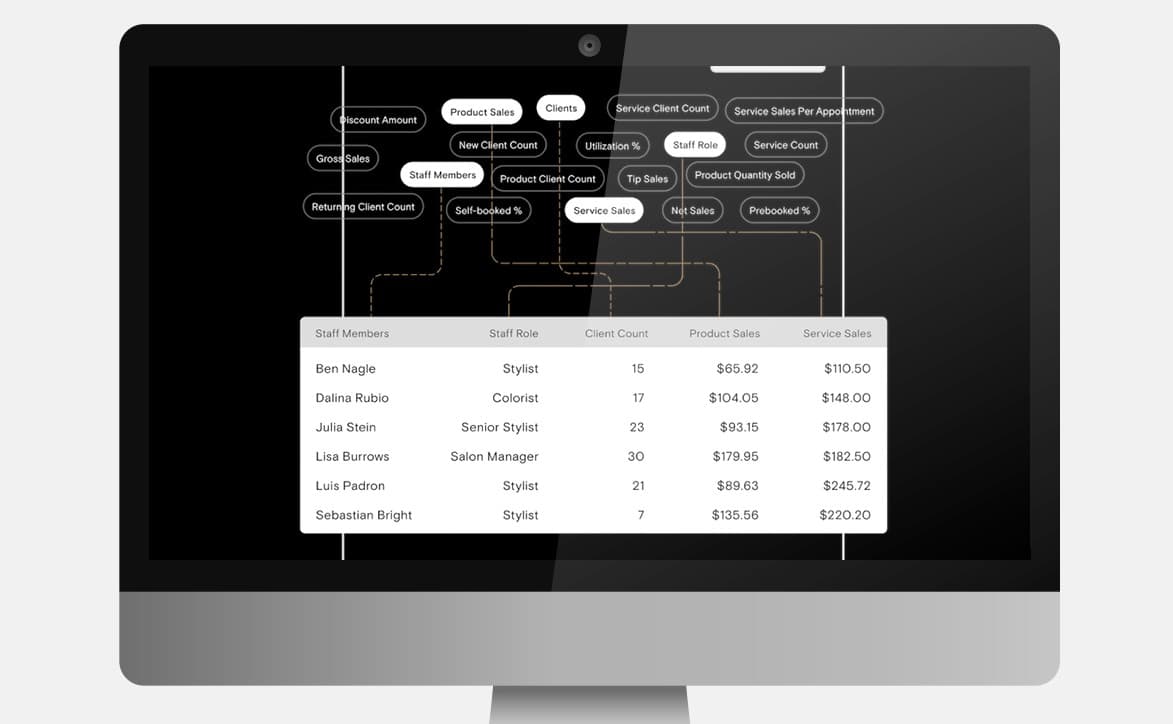
Salon Reports: How to Use Data to Grow Your Revenue
Salon reports reveal exactly how your business is performing. Boulevard makes it easy to pull, read, and act on this information for better growth
Read Article
Sales Commission Structure Salon Guide
Discover a practical guide to designing a sales commission structure. Learn about choosing the right commission plan and calculating payouts.
Read Article
How to Increase Salon Retail Sales: 6 Strategies
Want to boost salon retail sales? Boulevard shares proven strategies to increase product revenue, from staff training to retail displays that convert.
Read Article
What Are the Most Effective Nail Salon Marketing Strategies?
Boulevard breaks down nail salon marketing strategies to help you raise local visibility, strengthen social media engagement, and turn leads into regulars.
Read Article
The Client Retention Formula Every Salon Owner Should Know
Learn a simple client retention formula that measures salon loyalty while exploring practical strategies to drive repeat business and increase revenue.
Read ArticleSign up for weekly blog updates.